
Inquire or Request
- Regarding
-
Charlotte Perriand Low Coffee Table
by Charlotte Perriand , Jean Prouvé
This is the Perriand-Prouvé Low Coffee Table, a extremely rare vintage 1956 original, designed by Charlotte Perriand and executed by Les Ateliers Jean Prouvé. The hand-selected oak veneer top showcases the natural grain, set on a sculptural bent steel base in black lacquer — pure Jean Prouvé engineering. Its asymmetric, free-form silhouette breaks the rectangle rule, perfectly fusing natural wood with industrial metal. This is Perriand’s revolutionary design philosophy, distilled and made concrete.
Image Gallery


Charlotte Perriand
France
Charlotte Perriand believed that good design began not with form, but with life. Born in Paris in 1903, she came of age during the rise of modernism but never accepted its austerity at face value. After studying at the École de l’Union Centrale des Arts Décoratifs, she caught Le Corbusier’s attention with her Bar sous le Toit installation—an aluminum and glass interior that announced a new language for domestic space.
Perriand spent her career expanding that language, insisting that interiors could be democratic without losing their sensuality. Her collaborations with Le Corbusier and Pierre Jeanneret shaped the furniture of the machine age, yet her later work—wooden chaises, woven stools, modular shelving—revealed an intimacy modernism often forgot.
From the mountains of Savoie to postwar Japan, she treated design as both a social and material experiment. Wood, metal, bamboo—each was used for its honesty, its human touch. Today, Perriand’s work feels less like a relic of modernism than a quiet blueprint for how to live well: rigorous, humane, and always unfinished in the best sense.
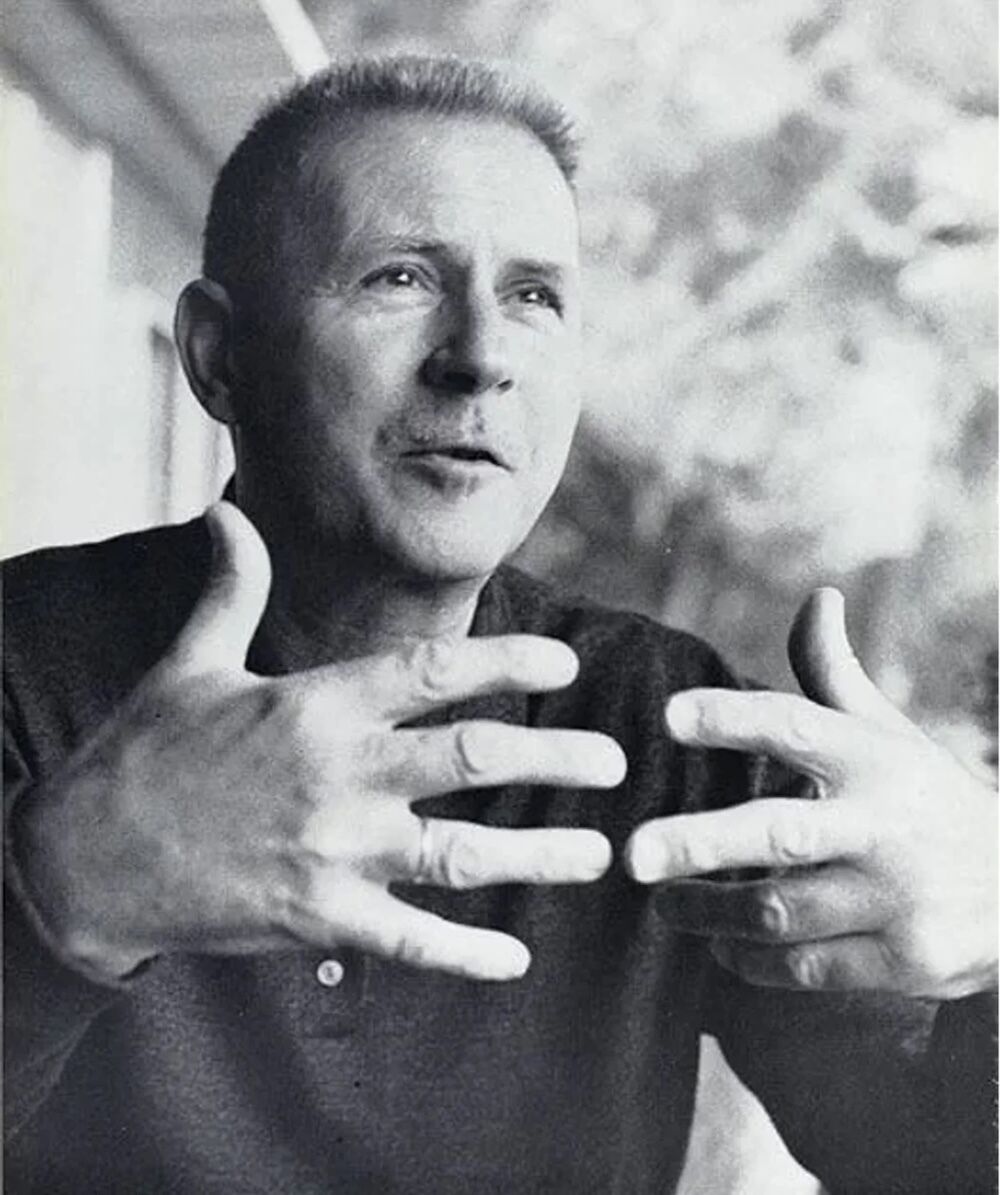
Jean Prouvé
France
Jean Prouvé built as if every object were a building, and every building an object. Born in Nancy in 1901 to an artist father and pianist mother, he trained first as a metalworker before turning his attention to architecture. That early discipline never left him. Whether designing a chair, a door, or an entire façade, Prouvé approached each as a problem of structure—how to make strength look light, how to let material speak for itself.
His Standard Chair of 1934 is perhaps the purest example: steel legs carrying the weight, wooden seat and back doing the rest. The logic is visible, almost pedagogical. The same thinking drove his prefabricated houses of the 1940s and ’50s—modular, portable, and decades ahead of their time.
For Prouvé, form was simply the consequence of engineering done right. His furniture and architecture still hold that tension between utility and grace: objects not designed to impress, but to endure. To handle one of his pieces is to feel both the weight of industry and the lightness of invention—modernism, not as theory, but as practice.
More in Interiors
View All
Imari Chest
by Philipp Mainzer
for e15

Enoki Bistro Table
by Philipp Mainzer
for e15

London Table
by Philipp Mainzer
for e15
More in Charlotte Perriand
View All
Tabouret Berger Stool
$759

Appliqué Cylindrique Petit
$677