
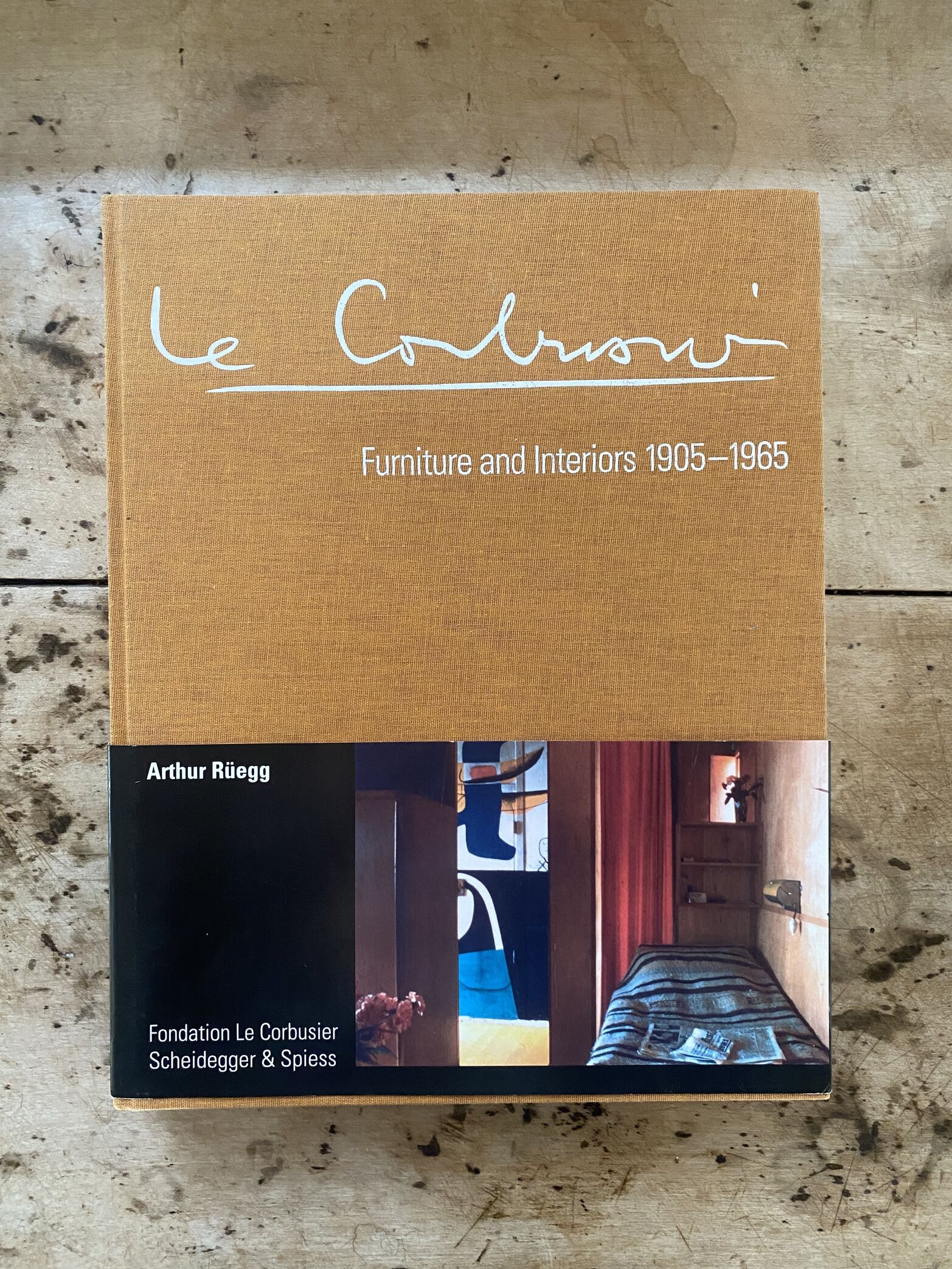
Le Corbusier — Furniture and Interiors, 1905 – 1965
by Le Corbusier
$475
Sale 15-25% off Select Tabletop; discount applied in cart
Le Corbusier, born Charles-Édouard Jeanneret, defined the trajectory of architectural modernism. His practice was grounded in a program of standardization and the application of industrial logic to the domestic sphere. By the late 1920s, he had codified his methodology into the “Five Points of a New Architecture,” a system that emphasized structural independence and the liberation of the floor plan.
His collaboration with Charlotte Perriand and Pierre Jeanneret extended these architectural principles to furniture, utilizing tubular steel and modular components to create objects that functioned as “equipment” for living. In his postwar work, exemplified by the Unité d’Habitation, he moved toward the use of béton brut, or raw concrete, emphasizing the tactile and sculptural weight of the material. Throughout his output, Le Corbusier maintained a focus on proportion and the social implications of design, positioning the built environment as a precise technical response to the requirements of the twentieth century.