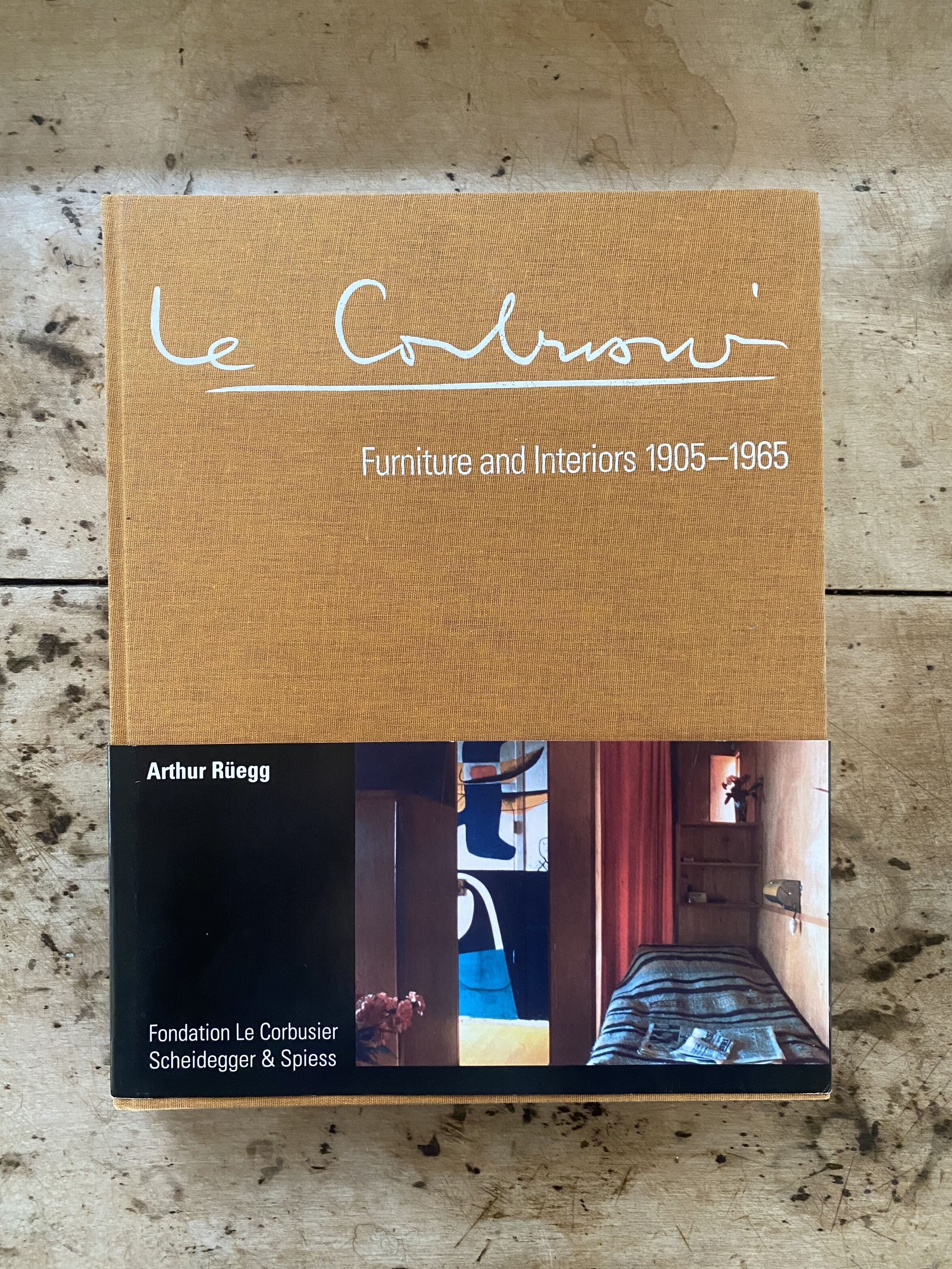
Le Corbusier: Furniture and Interiors, 1905 – 1965 provides a technical survey of the architect’s interior output over six decades. The volume begins with the early work of Charles-Édouard Jeanneret before documenting the transition toward équipement—a concept of standardized furnishings developed in the 1920s with Pierre Jeanneret and Charlotte Perriand.
The text traces the evolution from the precise tubular steel and leather systems of the interwar period to the utilitarian, crate-like wooden forms produced after 1945. Utilizing previously unpublished archival material and detailed floor plans, the book analyzes individual apartments as integrated environments where furniture and architecture operate as a singular apparatus. It remains a rigorous record of how Le Corbusier adapted industrial materials to the physical requirements of domestic life, maintaining structural clarity across shifting material constraints.
Image Gallery


Le Corbusier
Switzerland
Le Corbusier, born Charles-Édouard Jeanneret, defined the trajectory of architectural modernism. His practice was grounded in a program of standardization and the application of industrial logic to the domestic sphere. By the late 1920s, he had codified his methodology into the "Five Points of a New Architecture," a system that emphasized structural independence and the liberation of the floor plan.
His collaboration with Charlotte Perriand and Pierre Jeanneret extended these architectural principles to furniture, utilizing tubular steel and modular components to create objects that functioned as "equipment" for living. In his postwar work, exemplified by the Unité d’Habitation, he moved toward the use of béton brut, or raw concrete, emphasizing the tactile and sculptural weight of the material. Throughout his output, Le Corbusier maintained a focus on proportion and the social implications of design, positioning the built environment as a precise technical response to the requirements of the twentieth century.
More in Books
View All
Tom Kundig — Working Title
$45
Vincent Van Duysen – Complete Works
$125

Beaumont’s Kitchen
$55