
Arne Jacobsen’s AJ Cutlery produced Anton Michelson in 1957, is characterized by a lean, monolithic profile that eliminates the traditional distinction between handle and blade. Each piece is forged with a specific emphasis on the curve of the hand and the efficiency of the stroke, reflecting Jacobsen’s architectural preference for total integrated design. The comprehensive service includes twelve dinner knives, twelve dinner forks, twelve salad forks, twelve bread knives, twelve iced tea spoons, and twelve teaspoons. The set is further distinguished by fourteen bouillon spoons — eleven for right-handed use and three for left-handed use — alongside two meat forks. Void of ornamentation, the collection relies entirely on the precision of its matte steel forms to communicate its utility, representing a singular moment in the history of modern industrial design.
Image Gallery


Arne Jacobsen
Denmark
Arne Jacobsen’s practice was defined by a rigorous adherence to functionalism, a discipline he refined at the Royal Danish Academy of Fine Arts before graduating in 1927. His early architectural work, notably the Bellevue complex, established his ability to adapt the International Style to the specific material and environmental conditions of Denmark. Following the Second World War, his output expanded into a cohesive system of architecture, furniture, and industrial objects, often conceived as total environments.
Collaborating with manufacturers like Fritz Hansen, Jacobsen utilized molded plywood and laminated shells to develop a distinct ergonomic vocabulary. Designs such as the Ant, Series 7, and the seating for the SAS Royal Hotel—the Swan and Egg chairs—demonstrate a career-long focus on structural reduction and continuous surfaces. His work remains a primary record of the intersection between architectural modernism and industrial production, characterizing the formal clarity of postwar Danish design.
More in Tabletop
View All
B Set Beaker, Set of Four
$85

Country Tea Towel, Bois
$22

Mono SK59 Utility Knife
for Mono
$135
More in Arne Jacobsen
View All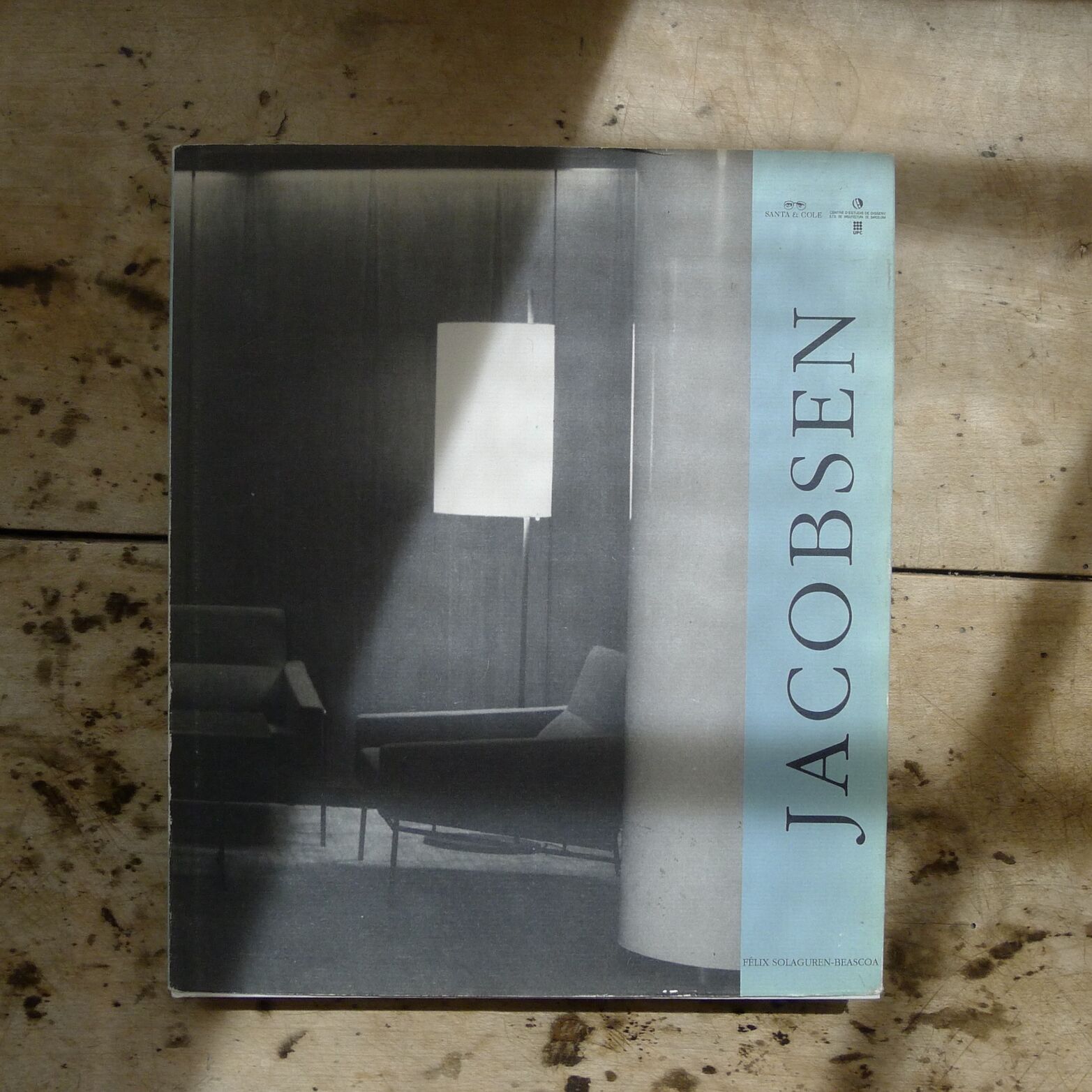
Arne Jacobsen (Clásicos del Diseño)
$75