
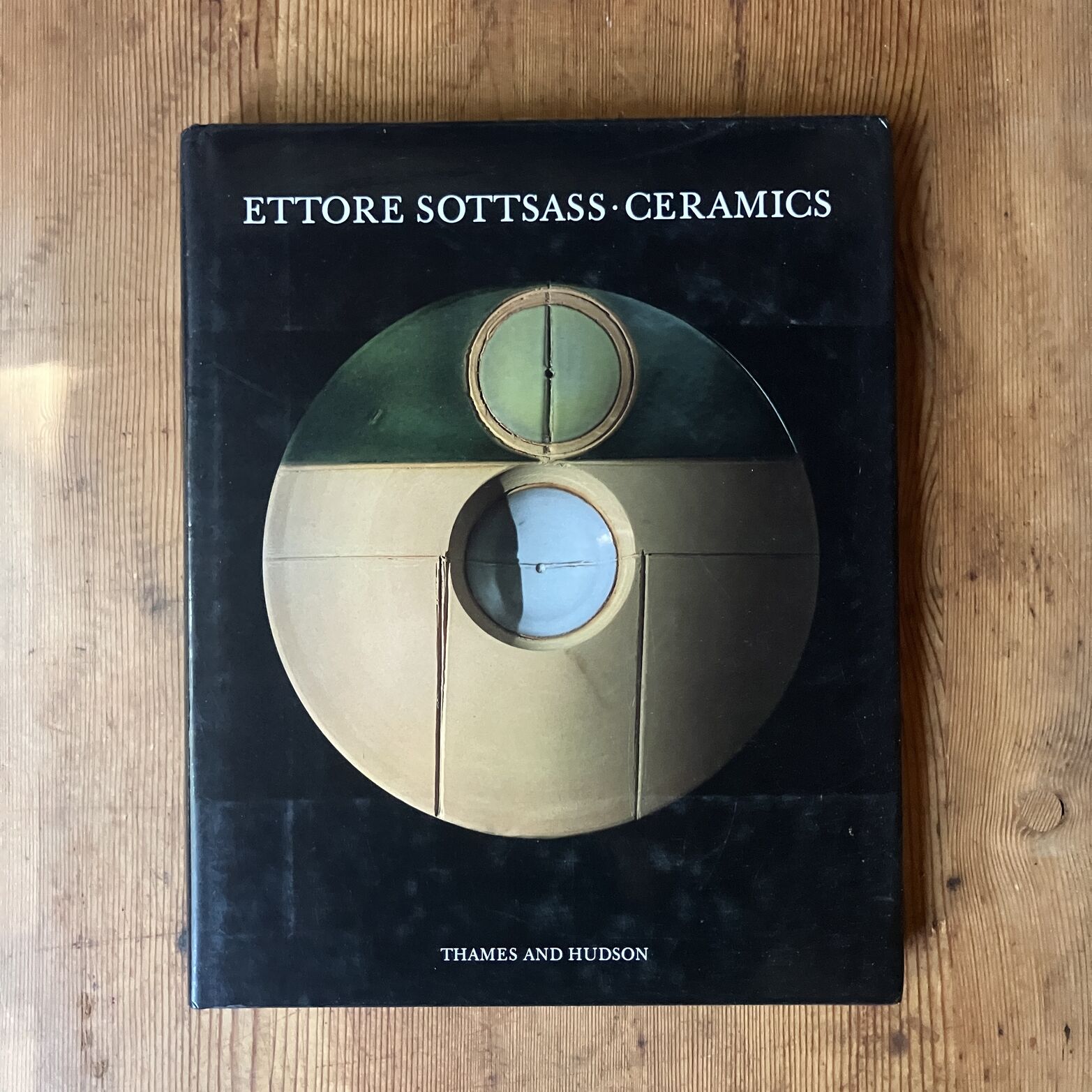
Published by Umberto Allemandi & C., Ettore Sottsass: Tutta la Ceramica is an exhaustive record of the artist’s prolific engagement with clay. The bilingual volume documents a vast spectrum of output, ranging from functional vessels and architectural tiles to totemic, sculptural objects produced across several decades.
The publication is organized chronologically, utilizing a visual sequence that tracks Sottsass’s evolution from the radical, experimental forms of the 1950s to the more structured, polychromatic geometries of his later career. Detailed color plates capture the specificities of his surface treatments — including glazed, incised, and raw finishes — while archival black-and-white imagery provides context for his production methods. Through its rigorous cataloging, the book examines how Ettore Sottsass used the ceramic medium as a primary vehicle for his investigations into ritual, symbolism, and the sensory impact of color.
Image Gallery


Ettore Sottsass
Austria
Ettore Sottsass (1917–2007) was a visionary Italian architect and designer whose work spanned multiple disciplines, including architecture, industrial design, furniture, and graphic design. Born in Innsbruck, Austria, Sottsass grew up in Milan, Italy, where his father was a prominent architect. This early exposure to architecture and design shaped his creative outlook. Sottsass is best known for his role in challenging the rigid functionalism that dominated post-war design. He began his career in the late 1940s, but it was during his time working for the Italian electronics company Olivetti in the 1950s and 60s that he gained international attention. His designs for Olivetti, particularly the bright red *Valentine* typewriter (1969), combined playful aesthetics with practical functionality, earning him the prestigious Compasso d'Oro award in 1959.
In 1981, Sottsass co-founded the Memphis Group, an avant-garde collective of designers that sought to redefine the boundaries of modern design by incorporating bold colors, eccentric shapes, and unconventional materials. The Memphis Group's creations embodied a rejection of traditional design norms, embracing a postmodern aesthetic that was both whimsical and provocative. Their work had a significant impact on contemporary design and helped cement Sottsass' reputation as an innovator. Throughout his career, Sottsass produced a wide array of work, from furniture and ceramics to jewelry and interiors. His signature use of vivid colors, dynamic forms, and an irreverent, almost rebellious approach to design made him one of the most influential figures in 20th-century design.
Sottsass' contributions to design extended far beyond his own creations; he inspired a new generation of designers to think beyond function and to see design as a form of artistic expression. He continued to work and innovate until his death in Milan in 2007 at the age of 90, leaving behind a legacy of creativity, innovation, and bold experimentation.
More in Books
View All
Jeff Wall – The Complete Edition
$150

Donald Judd – Furniture Retrospective
by Donald Judd
$695

Thomas Ruff – l.m.v.d.r. Volume 2
$250
More in Ettore Sottsass
View All
ES03 Butter Dish
$134
Ettore Sottsass Ceramics
$60